
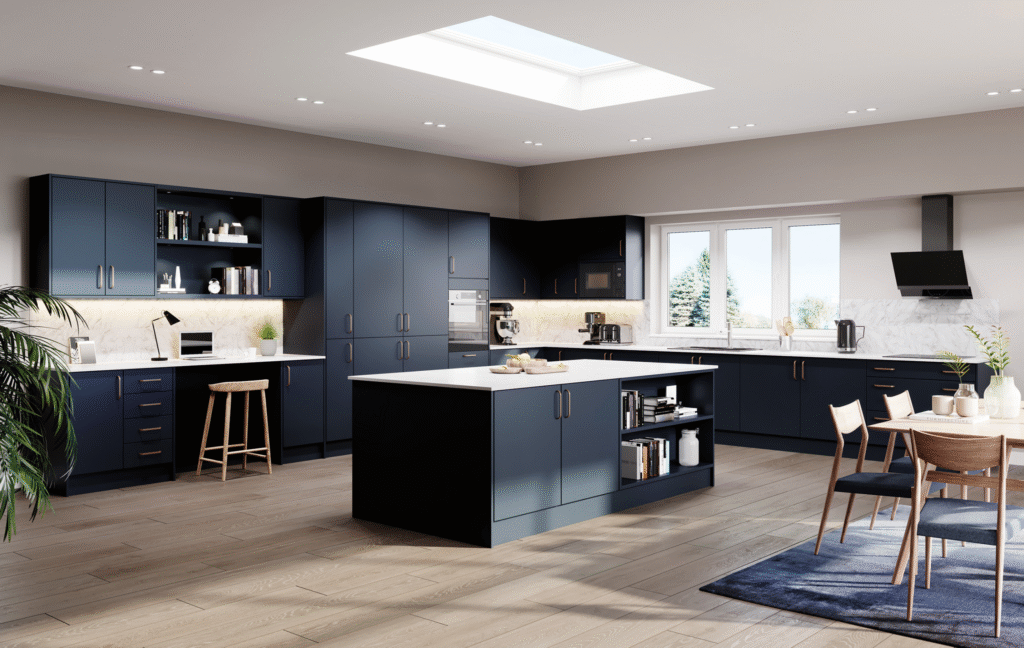
Modern life no longer separates cooking from living. The kitchen is not tucked away behind a door; it flows into dining areas, lounges, garden rooms and beyond. We work here. We host here. We unwind here. And yet, as our homes have opened up, so too has our desire for calm, hidden kitchens.
Where once the kitchen was proudly busy, with visible appliances, feature extractor hoods and layered accessories, today’s homeowners are seeking something quieter, more refined and considered. Concealment, it seems, has become the new expression of luxury.
What Is a Hidden Kitchen?
A hidden kitchen is a space that blends so seamlessly into its surroundings that it almost disappears. Cabinetry melts into wall colours. Appliances sit quietly behind integrated doors. Extractors vanish into worktops. Even taps and sockets are designed to disturb the eye as little as possible.
Essentially, hidden kitchens pare back the elements that once defined them, exposed appliances, protruding hardware and visual clutter, replacing them with clean lines and uninterrupted surfaces.
With the continued popularity of open-plan living, homeowners are increasingly looking for ways to conceal utilitarian kitchen elements. Hidden storage has become a top design priority, driven by a desire to maintain harmony across multifunctional spaces. When the kitchen can transition from hardworking workspace to serene entertaining backdrop within moments, it elevates the entire home.